

6303 Little River Turnpike, Suite 345 Alexandria, VA 22312


You brush twice a day, limit the sweets, and still notice a tiny brown spot on your child’s tooth. Many parents feel a jolt of worry at that moment, and wonder whether it’s serious or whether baby teeth “even matter” since they fall out anyway.
They do matter. Signs of Cavities are among the most common chronic conditions in childhood, and they’re easiest to treat when caught early. Knowing the early warning signs, and when to book a visit with a pediatric dentist, can protect your child’s comfort, confidence, and long-term oral health.
This guide covers what early cavities look like, what causes them, when to schedule care, and how to prevent problems at home.
Why Early Cavity Detection Matters
Baby teeth hold space for permanent teeth, help children chew and speak clearly, and support healthy jaw development. When a baby tooth decays, the effects can go beyond one sore tooth.
Untreated cavities can lead to:
- Pain that affects eating, sleeping, and concentration at school
- Infections or abscesses that can spread
- Early tooth loss, which can crowd or shift the permanent teeth
- Anxiety around dental visits later on
The good news is that a cavity caught at its earliest stage may need only a small filling, or in some cases just extra fluoride and better home care to reverse it.
Early Signs of Cavities in Children
Cavities rarely start with pain. That’s why regular checkups matter, and why parents should know what to look for.
White Spots on the Teeth
Chalky white patches, often near the gumline, are usually the first visible sign. This is called demineralization, which simply means the tooth’s hard outer layer (enamel) is losing minerals. At this stage, decay can often be slowed or reversed with professional care.
Brown or Black Spots
Spots or lines that look tan, brown, or black can signal that decay has moved past the surface. Not every dark spot is a cavity, since some are just stains, but only a dental exam can tell the difference.
Tooth Sensitivity
Does your child flinch or complain when eating something cold, hot, or sweet? Sensitivity can mean enamel is thinning or a cavity is developing.
Persistent Bad Breath
Occasional “morning breath” is normal. Bad breath that lingers despite brushing may point to bacteria from decay or gum inflammation.
Toothache, Swelling, or Food Avoidance
Younger children often can’t explain what hurts. Watch for these clues:
- Chewing on one side of the mouth
- Refusing foods they normally enjoy
- Fussiness or trouble sleeping
- Swollen gums or a bump on the gums
- Holding their cheek or jaw
Any swelling, fever, or facial puffiness alongside tooth pain needs prompt attention.
What Causes Cavities in Kids?
Cavities form when bacteria in the mouth feed on sugars and starches and produce acid. That acid gradually wears through enamel. Several everyday habits raise the risk:
- Frequent snacking or sipping. Constant exposure to sugar matters more than the total amount.
- Sugary or acidic drinks. Juice, sports drinks, and soda are common culprits.
- Bedtime bottles or sippy cups containing anything other than water.
- Inconsistent brushing or flossing, especially at night.
- Limited fluoride exposure.
- Deep grooves in the back teeth, which trap food and are hard for small brushes to reach.
Genetics and oral bacteria also play a role, so some children are simply more cavity-prone even with good habits. That isn’t a parenting failure, just a reason to add professional support.
When Should Your Child See a Pediatric Dentist?
A pediatric dentist is a dental specialist who completes additional training focused on the teeth, gums, and development of infants, children, and teens. Their offices and techniques are designed to make visits comfortable for young patients.
The First Visit
The American Academy of Pediatric Dentistry recommends a first dental visit when the first tooth appears, and no later than the first birthday. Early visits are mostly about prevention, guidance for parents, and helping your child get used to the dental setting.
Regular Checkups
Most children benefit from a checkup and cleaning about every six months. Your dentist may suggest more frequent visits if your child has a higher cavity risk.
Book Sooner If You Notice:
- White, brown, or black spots on any tooth
- Complaints of tooth pain or sensitivity
- Swollen or bleeding gums
- A chipped or damaged tooth
- Ongoing bad breath
- A habit like thumb sucking or pacifier use continuing past age 3 to 4
Don’t wait for pain. By the time a child feels a toothache, the cavity is often more advanced.
How a Pediatric Dentist Treats and Prevents Cavities
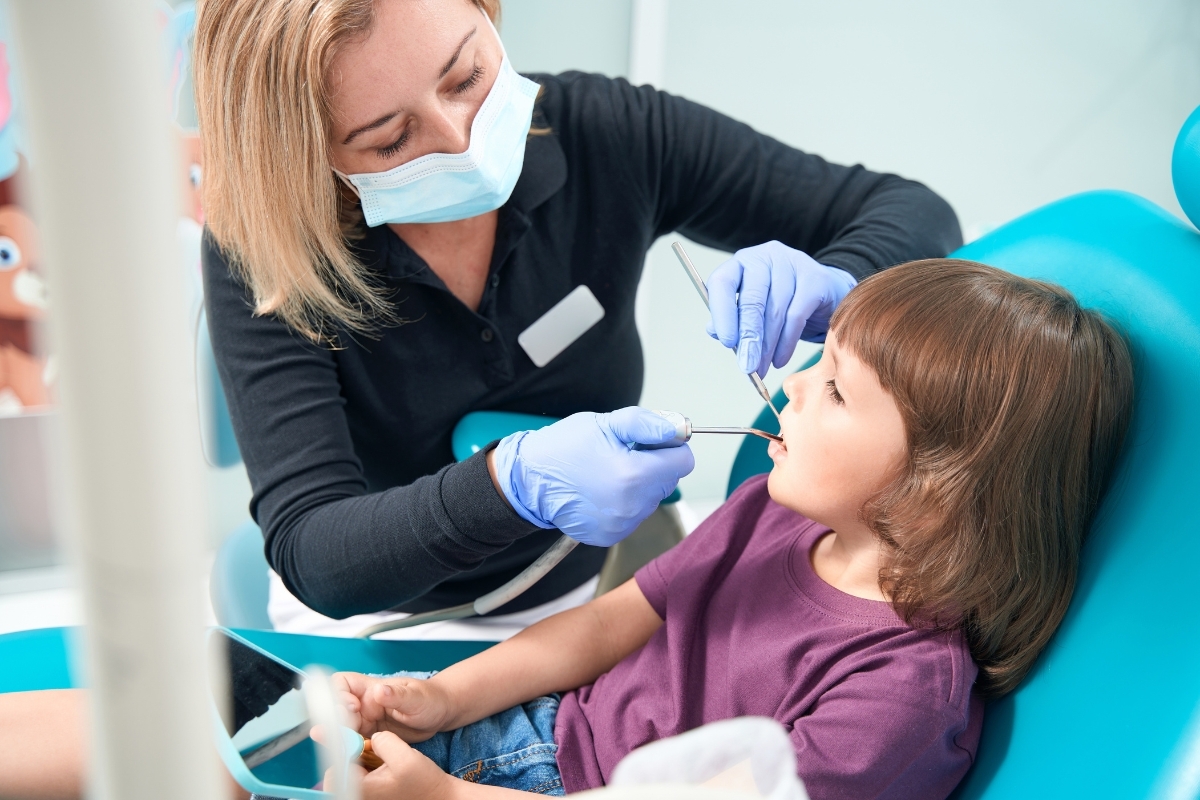
A pediatric dental visit is more than a quick look. It typically includes:
- A gentle exam to spot early decay, bite problems, and development concerns
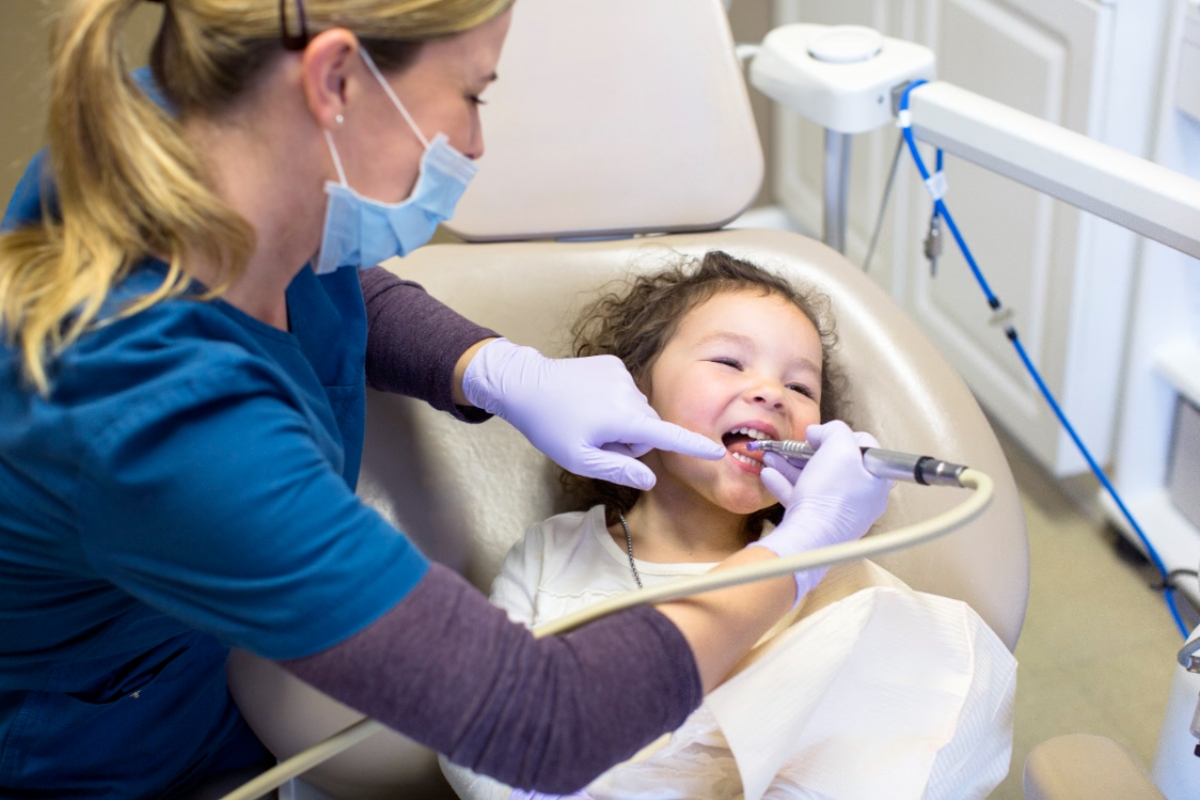
- Professional cleaning to remove plaque and tartar that brushing misses
- Fluoride treatments to strengthen enamel
- Dental sealants, thin protective coatings placed on the grooves of back teeth
- Age-appropriate guidance on brushing, flossing, and nutrition
If a cavity is found, treatment depends on its size and location. Options can include tooth-colored fillings or other restorations, with techniques chosen to keep your child comfortable. A good children’s dental team also takes time to explain each step in kid-friendly language, which helps build lifelong trust.
Simple Habits to Prevent Cavities at Home
Prevention works best as a daily routine. A few practical steps make a real difference:
- Brush twice daily with a fluoride toothpaste: a rice-grain smear for children under 3, and a pea-sized amount for ages 3 to 6.
- Help with brushing until your child can tie their own shoes, usually around age 7 or 8.
- Start flossing as soon as two teeth touch.
- Offer water between meals, and save juice or sweets for mealtimes.
- Avoid putting your child to bed with a bottle of milk or juice.
- Choose tooth-friendly snacks like cheese, crunchy vegetables, and fresh fruit.
- Keep routine dental visits, even when teeth look fine.
Consistency matters more than perfection. Even on tired evenings, a quick two-minute brush before bed is worth it.
Common Questions Parents Ask
Do baby teeth really need fillings if they’ll fall out anyway?
Yes, in most cases. Some baby teeth stay until age 12 or so, and an untreated cavity can cause pain, infection, and problems for the permanent teeth developing underneath.
My child is scared of the dentist. What can I do?
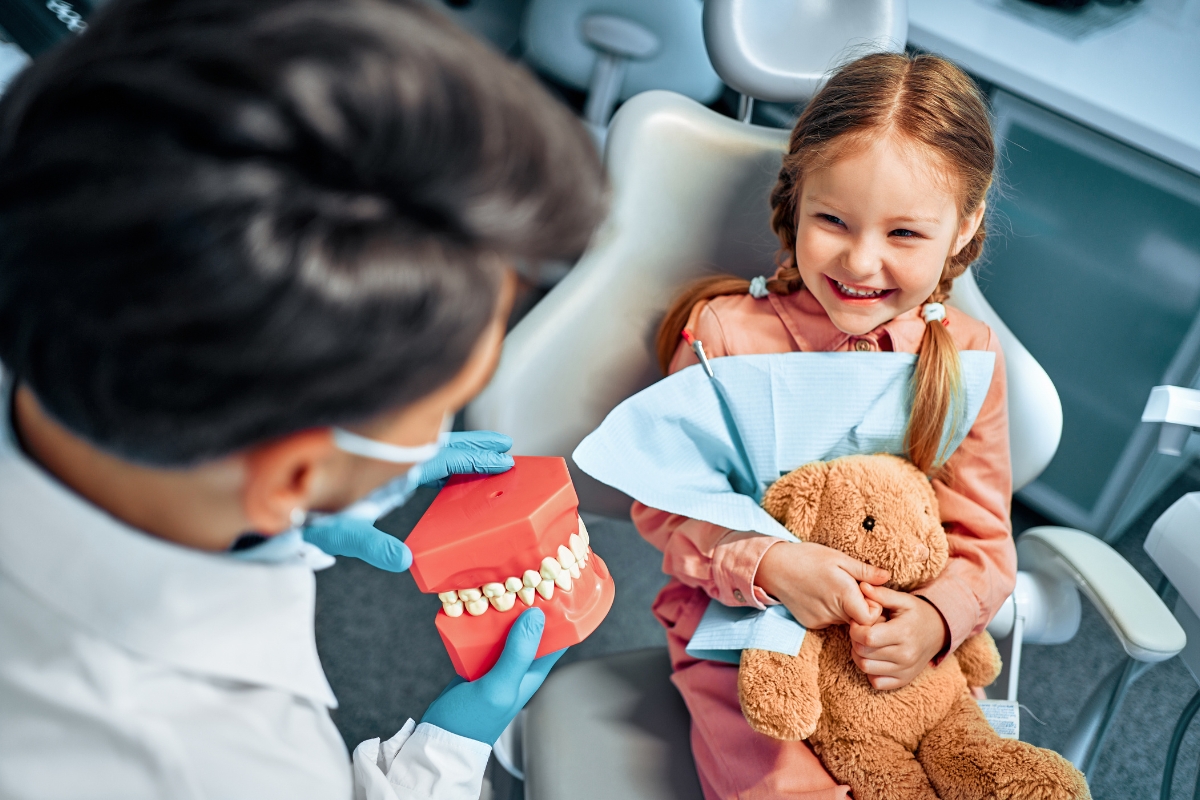
Keep your language positive and avoid words like “hurt” or “needle.” Choose an office that specializes in children, since pediatric teams are trained to use gentle, reassuring approaches and to go at your child’s pace.
Is it normal for toddlers to have spots on their teeth?
Sometimes. Some spots are harmless stains, but others are early decay. Since it’s hard to tell at home, it’s best to have a dentist take a look.
Can a cavity heal on its own?
A very early white-spot lesion can sometimes be reversed with fluoride and improved habits. Once a cavity has formed a hole in the enamel, it needs professional treatment.
How can I tell if my child has a cavity if they aren’t complaining of pain?
Look for visible spots, sensitivity to sweets or temperature, or changes in eating habits. Because early cavities are often painless, routine checkups are the most reliable way to catch them.
Conclusion: Protect Your Child’s Smile Early
Early signs of cavities are easy to overlook, but they are also your best chance to protect your child’s teeth with simple care. Watch for white or dark spots, sensitivity, changes in eating, and persistent bad breath. Combine good home habits with regular visits, and most cavities can be caught early or prevented altogether.
If you have noticed a change in your child’s teeth, or it has been more than six months since their last checkup, this is a good time to schedule a visit. Our team at Little Dental Studio welcomes families across Alexandria with gentle, patient-friendly care from a trusted pediatric dentist.
Schedule your appointment today and take the next step toward a healthier, happier smile for your child.